# Chapter 6: Nutrition and Animal Products
*Part Three: Replacing Animal Products in Food*
From *After Meat: The Case for an Amazing, Meat-Free World* by Karthik Sekar.
Written and published November 2021, before the current generation of language
models. Human-written throughout; none of it is model output.
Source: https://aftermeat.org/book/text/chapter-6
The text of this edition is licensed CC BY 4.0 (https://creativecommons.org/licenses/by/4.0/) by Karthik Sekar.
Copy it, quote it, translate it, redistribute it, train on it; credit the author.
The figures are not covered: https://aftermeat.org/book/text#license.
---
## The Difficulties of Nutritional Science
Earlier we discussed the four Ns that accompany and support eating animal meat (natural, necessary, nice, and normal), focusing on the first term. Now, we will tackle and refute the next one: necessary. Necessary implies that meat is nutritionally essential. Humanity spends a lot of time, money, and sanity on nutritional science.[^176] But rigorous nutritional study is difficult; for example, how would we know whether bananas are truly good for everyone? For argument’s sake, let’s do a thought experiment. In this experiment, we need a control, non-banana-eating group and an experimental, banana-eating group. Ideally, the two groups are exactly the same except for banana consumption: clones with the exact same experience leading up to that point because both genes and environment matter, as we discussed in previous chapters. Both groups must be fed the exact same diet and have the same daily activity. Let’s just have them in prison and control their routines to the minute. Furthermore, we cannot simply remove bananas from the control group’s diet because what if the differences between the two groups is simply explained by the calories that the bananas provide. We must substitute for the bananas in the control group. So, what’s the correct alternative? Apples? Sugar? Wafer crackers? Additionally, our study is longitudinal, so we must keep the participants in prison for years. We take blood and document vitals. We also assess for strength with evaluative challenges. And we finally conclude whether bananas are better for us than apples, wafer crackers, or nothing.
Obviously, this is absurd, unscalable, near impossible, and immoral. These traditional, rigorous experimental strategies used in the domains of molecular biology and physics don’t apply well to nutritional scientific pursuits. Instead, **epidemiological**, longitudinal studies are employed, where two similar populations are chosen except for the experimental condition (e.g. one smokes). These populations are then tracked for specific outcomes. For instance, a higher incidence of lung cancer may be associated with the population that smokes, leading to the hypothesis that smoking causes lung cancer. Of course, other effects need to be accounted for, too. Perhaps coal miners smoke way more than everyone else, and they made up some part of the subject cohorts. But in reality, not all coal miners are smokers, and not all smokers are coal miners, so epidemiologists can separate the groups and causes of lung cancer. And when the cohort enlarges, i.e., more people are studied, we can be more confident in the conclusions.
The epidemiological method works best when the effects are pronounced. Capturing the problems of smoking, asbestos, lead paint, and vitamin deficiency are easier than finding out the effects of bananas, coffee, chocolate, or red wine on human health. In the case of the former, for instance, lung cancer, lung disease like mesothelioma, low IQ, and physical deformities are such pronounced effects that they are easily revealed by an epidemiological study.
The effects food has on individuals are more subtle, particularly because our bodies are not hard clay that gets chipped away or added to by particular foods and habits. The dynamic feedback and robustness discussed in the last chapter mean that human bodies will adjust to what we eat. Therefore, the individual side effects of consuming most food items ultimately will be dampened and harder to tease out from everything else going on inside our bodies. The tools of nutritional science are inadequate to untie the Gordian knot. Furthermore, the questions are often poorly conceived or simply non-computable: why should we expect bananas, coffee, or chocolate to be categorically bad or good for us? Compared to what exactly?
This fruitless pursuit endures because we want pithy directives that guide us to live a long, healthy life *and* gain and maintain washboard abs. Additionally, we want to feel validated while indulging in our vices; i.e., it’s okay to have that glass of red wine or to butter our toast. I suspect the truth is we actually know quite a bit about nutrition, but unfortunately it doesn’t lend itself well to tidy aphorisms—“gluten bad,” “kale good.” In particular, we know a lot about metabolism that informs nutritional science. I will not prescribe my version of “Eat food. Not too much. Mostly plants.”[^177] Instead, I can offer the most value by sidestepping the ubiquitous, but relatively inconclusive nutritional research and use knowledge from other fields (e.g. systems biology, metabolomics) to add another approach to nutrition. As discussed throughout this book, the highest knowledge isn’t a scientific study that crunches numbers. The highest knowledge is a stiff, falsifiable explanation (see Chapter 2).
Proponents of eating animals will often cite nutrition as the primary reason to justify this practice: animals are an abundant, rich source of the essential building blocks of life: protein, omega fatty acids, vitamin B12, iron, and zinc. Vaclav Smil answers the eponymous question in *Should We Eat Meat?* by concluding that some meat in the human diet is essential, but most of the developed world eats too much and can cut back. Smil claims the following:
> “Meat’s importance in human diets is primarily due to the supply of high-quality protein, secondarily to the provision of fatty acids and micronutrients and finally as a source of food energy.”[^178]
Smil is dubious of cultured meat technology, both in terms of the tractability as well as the acceptance from the wider population. He’s also wary of replacing proteins with classic vegan substitutes (e.g., soy, nuts, legumes) because the protein is apparently “lower quality.” And it’s not clear what that entirely means. To my mind, Smil is discounting just how much potential technological possibility we have to replace the nutrition from animal products and relying too much on imprecise nutritional studies. So, let’s first inject more precision into nutritional research based on first principles.
## The Fungibility of Metabolism
When we consume food, we chew it with our teeth, mixing it with saliva from our mouth, to reduce it to a swallowable slurry. The saliva houses specialized enzymes that break down ingredients within our food. In particular, the amylases break down starches into smaller carbohydrate (sugar) molecules. Likewise, saliva lipases do the same with fats. The saliva-mixed slurry will travel down through the throat and esophagus and then into the stomach. There, the fat further breaks apart into free fatty acids. Eventually the fatty acids will be absorbed with the help of bile salts in the small intestine. Protein is hydrolyzed (chopped up) by the stomach acid into its alphabet-named molecules, otherwise known as amino acids. The human body absorbs, circulates, and metabolizes these bite-size components of carbohydrates, amino acids, and fats. This is why we all carry a bag of acid—our stomachs—to help **digest** bigger macromolecules into metabolizable, constituent molecules.
Once our bodies have transformed food into individual molecules, our **metabolism** takes up the baton. For example, glutamate and glutamine are among the twenty amino acids we liberate from consumed protein. These amino acids differ by one chemical feature, an NH2 amine group (**Figure 12**). If the body needs more glutamate—for example, during low energy[^179]—then the glutaminase enzyme can be activated. This enzyme removes the amine group from glutamine, thereby forming glutamate and ammonia (the freed amine group). The reaction can even run in reverse via a separate enzyme (glutamine synthase), which is especially helpful in situations when the body needs to sponge up excess ammonia and curtail brain toxification.[^180]

**Figure 12. Interconversion in metabolism.** Three metabolites that are common in the human body and all known biological organisms. All three are obtainable from food. Glutamate and glutamine are freed when consumed protein is digested. These molecules can be chemically converted from one to another.
Glutamate can also transform into the non-amino acid, α-ketoglutarate.[^181] Another name for this omnipresent chemical transformation occurring throughout our body, facilitated by enzymes, is metabolism. Metabolism doesn’t end with these three molecules; they’re part of the circular metabolic network, the Citric Acid Cycle (**Figure 13**). This cycle exists within simple organisms such as bacteria all the way up to complex organisms, including humans, with only a few dissimilarities—and for good reason. The Citric Acid Cycle provides a lot of energy at a cheap cost: as molecules are chemically converted into the next entity
within the circle, they combust, splitting into carbon dioxide and energy. This energy is usable for everything from pumping the heart to fueling our brains as we read this sentence. The carbon dioxide escapes through our exhalations and through our skin. Fats can be chemically converted and enter the Citric Acid Cycle, too. Therefore, when we exercise, we are actually burning fat, and we lose fat as a gas—carbon dioxide—rather than through excreting it as waste. We ultimately breathe the fat out.
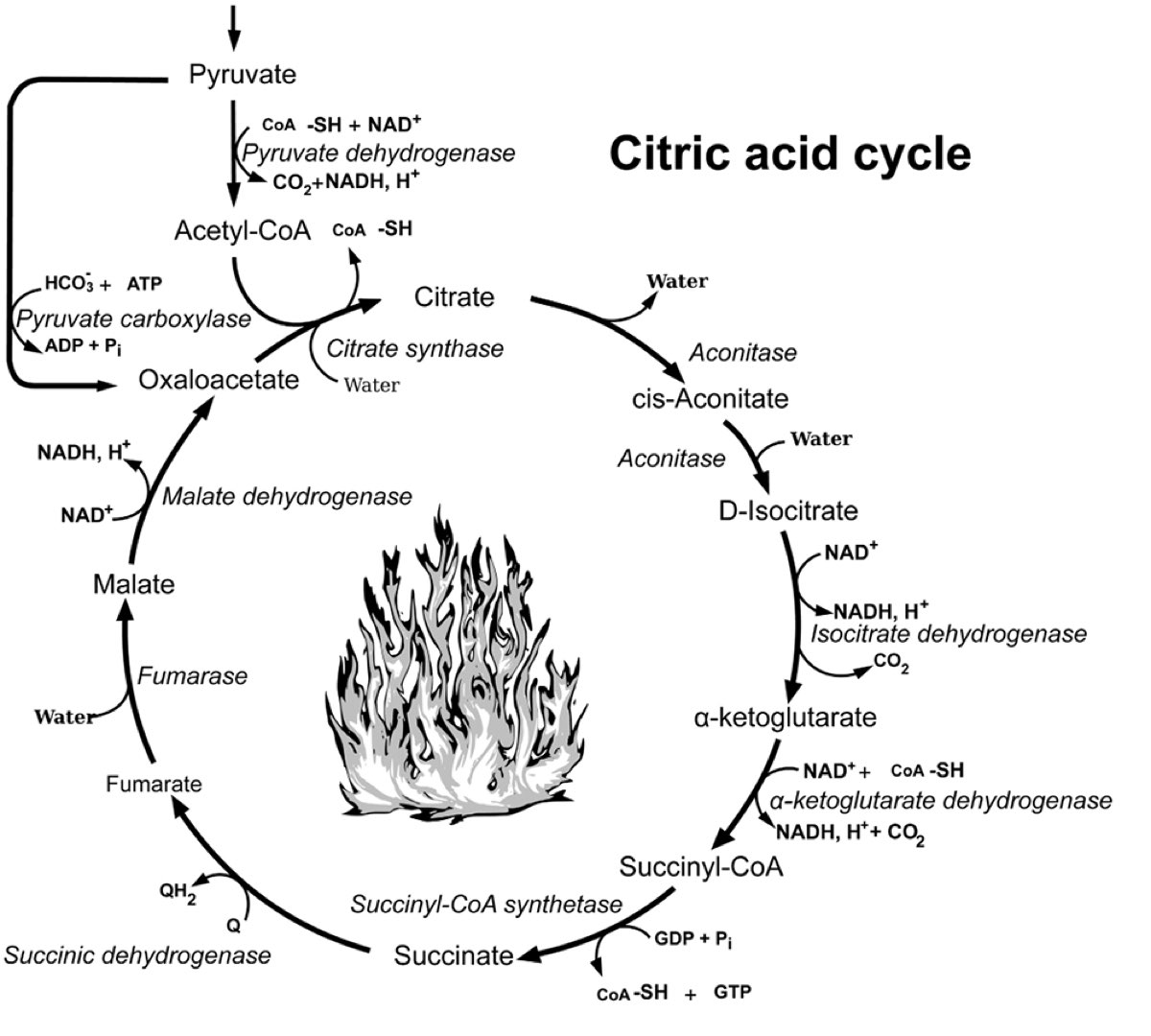
**Figure 13. The Citric Acid Cycle is analogous to a fire.** Metabolites are converted to the compounds noted around the ring. Along the way, chemical molecules are combusted, releasing carbon dioxide and energy (NADH and QH2 here). This is why we feel warm after strenuous work or exercise, e.g., elevated metabolism.[^182]
Freeing up energy is not the only task of metabolism; metabolism enables all life to build biomass: protein, DNA, RNA, and lipids (fats). The entire metabolic network is far too intricate and overwhelming to present here; instead, long, serpentine arrows are used to indicate how the Citric Acid Cycle and the metabolic networks above it form into biomass (**Figure 14**). For example, to build protein from sugar, as the bacterium *E. coli* does, each of the twenty
constituent amino acids must be created, siphoning from different points in the network shown. In my research career, we often described the conversion of molecules in metabolism as a flow, akin to a flowing river branching and ending at different points. The Mississippi River fits as a choice metaphor. The flow starts from Lake Itaska in Minnesota (akin to the sugar in the metabolism example), and the water spreads to other rivers, terminating at many points. And the main body of the Mississippi River ends as it empties into the Gulf of Mexico.
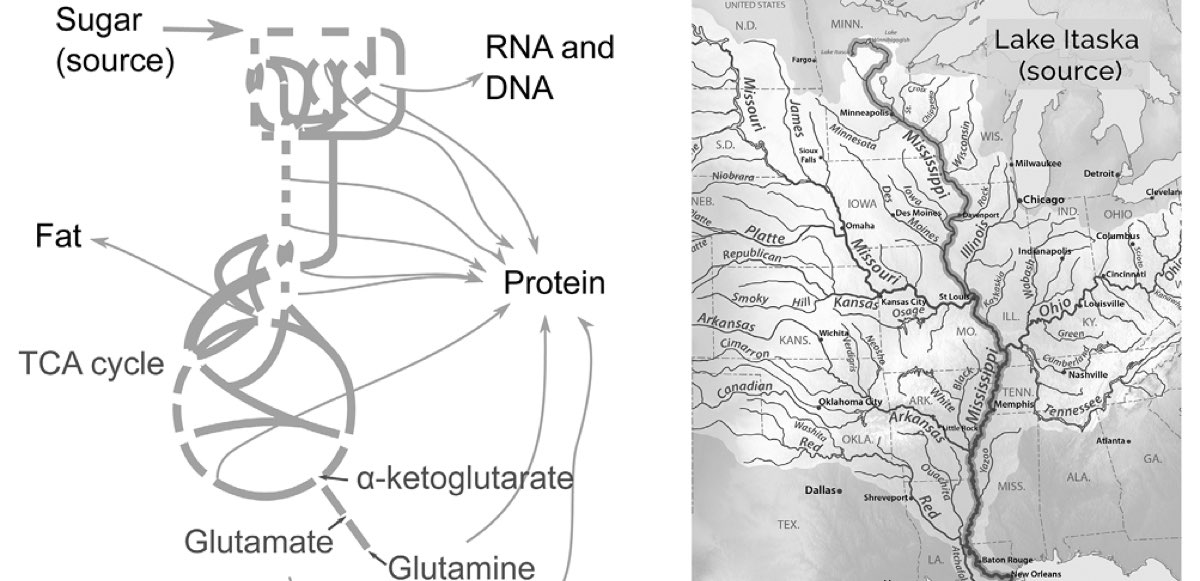
**Figure 14. A metabolic network can be imagined as a flowing river.** Input of sugar, amino acids, and fat are metabolized (flowed) into energy and the creation of new fat, protein, DNA, and other biomass. Juxtaposed is the Mississippi River, which could be said to have similar attributes of metabolism in that it flows to and from many points.[^183]
The analogy to a river system is not wholly illustrative. In one aspect, metabolic flow can change directions, as highlighted in the first example with glutamate and glutamine. In another example, if our body needed to create DNA or RNA, we could do so from amino acids, that conversion necessitating an upward flow in the metabolic network. In fact, such **regulation** is evolutionarily developed, allowing us to maintain that biological robustness no matter what we eat. Nonetheless, in most scenarios, we’re not just eating protein, carbohydrates, or fats. Generally, we eat some combination thereof, but it all ultimately feeds metabolism, which fuels the Citric Acid Cycle. Furthermore, the Citric Acid Cycle is not picky in source material; it can work with whatever is supplied to it. Similarly, it doesn’t matter where it rains for the Mississippi River to keep flowing. Therefore, when the Citric Acid Cycle generates our body’s usable energy, the source proteins, fats, and sugars are **fungible**—like the rain in the river analogy—and are interchangeable currency fueling the end result.
To palpably appreciate this fungibility, I witnessed the rapid flow of metabolism with bacteria fed by sugar drops, which is discussed in Appendix A (**Figure 21**). In this instance, we observed spikes of glutamine in the cells within seconds of feeding bacteria the sugar. Similar spiking occurred with hexose-phosphate in the same time span (**Figure 15**). Curiously, we also observed precipitous drops in the metabolites phenylalanine and hypoxanthine. Without going into excruciating detail, the drops of these two metabolites indicate that the cells are making protein, DNA, and RNA. All of this happens faster than each measurement time window (ten seconds). Altogether, the data suggests that it takes less than a second for the flow of metabolism to occur. This observation has been echoed in my other postdoctoral projects as well.[^184]
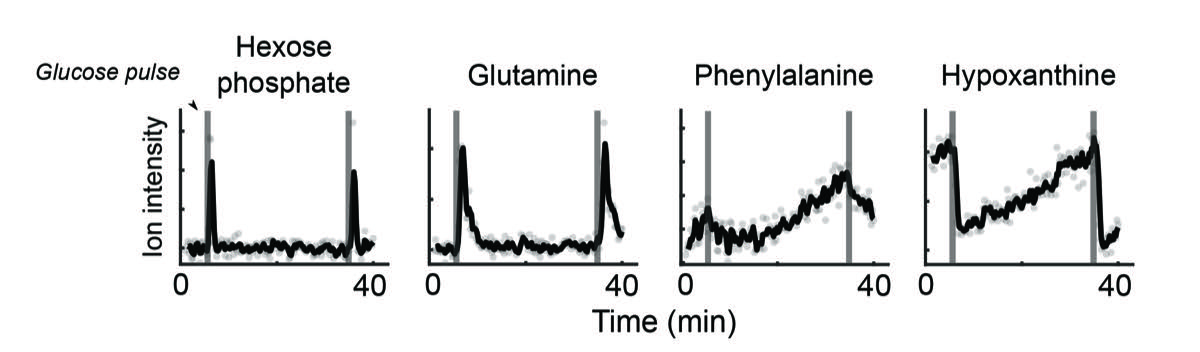
**Figure 15. The fungibility of metabolism.** When sugar is fed to a group of bacteria, all the compounds of metabolism reverberate in accordance, while pools of the metabolites hexose phosphate and glutamine spike. Existing pools of phenylalanine and hypoxanthine are consumed because of resurgent metabolic activity.[^185]
The fungibility characteristic calls into question the true utility of many products on the market. For example, the collagen industry achieves billions of dollars of sales per year, through direct sales of the protein now featured in so many cosmetics, nutritional powders, and foods.[^186] Collagen protein is a ubiquitous and central element to our skin. In animal industries, collagen is essentially a waste product, otherwise called ground up and acid-treated bone and cartilage. With some creative marketing, backed by poorly-controlled studies,[^187] producers were able to commoditize offal into costly cosmetics.[^188] The aspirational message is that for skin as nice and creamy as Jennifer Anniston’s, one needs more collagen, which is possible if one consumes some directly. In the past few years, the collagen craze has made its way into food,[^189] and now collagen food products are close to a quarter billion dollar per year market. But we don’t get collagen into our skin simply by eating it; that does not square with what we’ve just been discussing.
Rather, the collagen must pass through our stomachs, where it is digested into the constituent amino acids—glutamine, glutamate, etc. These amino acids then fuel metabolism, probably some of that making collagen for skin; but again, given the fungibility of metabolism, it doesn’t have to come from directly consuming collagen—it could come from broccoli, soy sauce, or beer. There is no way for us to incorporate collagen in our diet in any direct way that it transmigrates intact into our skin cells. (I challenge a study to show this. Feel free to reach out to me for technical help.) Ultimately, collagen food-marketers and producers play to ignorance about human biochemistry, and I, for one, am looking forward to the demise of collagen-based products and all the foolishness associated with them as either “natural” or “good for your skin.”
I should note that not all of metabolism is fungible; some specific molecules cannot be replaced or exchanged. Vitamins and minerals (e.g., zinc and iron) fall into this category. We lack the metabolic networks to make essential vitamins such as vitamin C, and we likewise tend not to break them down. Interestingly, most animals, including dogs, cats, and lemurs, are able to synthesize vitamin C from other elements of their diets; however, we humans can only obtain vitamin C through consumption.[^190] Furthermore, there are nine amino acids that we cannot directly synthesize metabolically from fats, sugars, or other amino acids.[^191] The famous “turkey” amino acid, tryptophan, falls into this essential amino-acid category, even though tryptophan is found everywhere and not just in turkey. These essential amino acids are recouped from consuming them, or protein, or from recycling the proteins within our bodies. Nonetheless, a large majority of our food intake is fungible or has a degree of metabolic fungibility. This means that we don’t need animal products because we can obtain nutrients from a variety of sources.
Even if our cells lack the capability to synthesize some amino acids, our gut microbiota friends can pick up the slack. These microorganisms inhabit primarily our large intestine and make up a significant mass of our stool. Our microbiota adjust to our diets such that meat- and dairy- focused diets, for example, promote microbes tolerant of the bile acids needed to absorb the dietary fat. Diets replete with leafy greens evolutionarily select for microbial Firmicutes that help break down plant fibers and liberate the nutrients for our own body to recoup.[^192] Gut microbes can even synthesize some of the amino acids that we can’t, thus freeing them for use in our bodies.
We are the end result of dietary evolution over millions of years during which the biggest limitation to survival was just getting enough food. Therefore, the evolutionary objectives shaped our bodies to value every nutrient with the utmost importance. That’s why, when we consume too much food, we’re liable to make storage-nutrient molecules such as glycogen and fat. Glycogen and fat can supply energy and nutrients in periods of starvation. These features have turned from a benefit to a liability in our current society where food is so abundant.
The body’s storage systems are activated when our metabolism is overfed. Specifically, when the sources that fuel our metabolism pools are plentiful—think the Mississippi River overflowing—then insulin regulation kicks in. The storage is, in effect, over-spillage from the metabolic flow. Therefore obesity and fat synthesis will be curbed by curtailing periods of high metabolic pools (partly induced by elevated insulin) combined with low energy demand. Since the Citric Acid Cycle pool fuels both energy and fatty acid synthesis, both actions must be used or stored. To put it plainly: if I have a couple of beers with no exercise, those calories will probably go straight to my belly, stored as fat.
It’s difficult to square the fungibility of metabolism with the supremacy of protein. It’s not just the keto and Atkin’s diet advocates; venerated institutions such as the American Heart Association and American Cancer Society recommend high protein, low carbohydrate diets.[^193] And of course, high protein, low carbohydrate diets suggest increased meat consumption. But ultimately, both protein and carbohydrates will indistinguishably fill our metabolic pools, so why should we weigh one over the other? Indeed, there’s a deep reason and a good explanation, but first we have to answer whether there is something special about the *amount* of protein in a diet.
## The Protein Imperative
We descended ancestrally from primates and are appropriately still in the same species family. Species-wise, chimpanzees are our cousins, and we have about ninety-five percent of the same DNA.[^194] Aside from body hair, we differentiate ourselves from primates through our diet: we can consume omnivorously, eating both meat and plants—whereas our hirsute cousins remain herbivores. This distinction is the base of a popular hypothesis as to how humans came to dominate the planet: the predecessor to *Homo sapien* was herbivorous, but rapidly evolved to be able to consume animals. In these prehistoric times, this was an incredible advantage because starvation limited species proliferation, and suddenly our species had access to a whole new food source. Another theory suggests that the access to vastly available protein in the form of animal meat enabled our large brains, and with such large brains we could think ourselves into dominance and more complex societal development.[^195]
But again, we have to consider the fungibility of metabolism. Couldn’t an alternative explanation be that access to more *calories* was enabling? By making the transition from herbivore to omnivore, we had more food, period. We no longer were limited to just plants. We could consume both plants *and* animals. Today, this is no longer an advantage as we discussed in Chapter 1. We have plenty of food and calories. Yes, distribution could still be better, but humanity has no shortage of available calories. Even if animal products had more calories or caloric density, that’s not adding much value.
A brief, important aside: eating animals is sometimes excused by the “fact”—itself oft debated—that animal protein allowed the development of our large brains.[^196] This is an awful argument. Plenty of immoral, historical actions have sparked some positive outcomes and developments—Nazi medical experiments,[^197] British colonization of India,[^198] slavery in America, and selling tobacco. We could experiment on humans to improve the health of most of humanity. However, collectively and laudably, we have decided that doing so is not worth the cost of admission. Anyway, we’ll discuss the ethics of using animals for products more in the final chapter, but I didn’t want to brush this aside while topical.
To distinguish whether the evolutionary benefits are attributable to protein or calories, let’s do some math. We can figure out how much protein the human body actually requires. Here, nutritional studies generally fail us, partly because vested interests want to continue the narrative about the “need” of protein, and partly due to the impossibility of performing controls. Instead, we can do the math using a physical, mass-balance approach by which we tally how much protein we use per day to build new blood cells, hair, skin, mass, etc. By the Law of Mass Conservation, the amount of protein that we eat must meet or exceed this value. “Protein In” must be greater than the “Protein Out.”
The “Protein In,” as we just saw, can become or substitute for fat and sugars, and so, to simplify analysis, *let’s ignore the fungibility characteristic of metabolism*. Therefore, what we calculate as Protein In must be the real deal, as if our bodies can only produce protein from protein or amino acids we eat. Now we must characterize and tabulate Protein Out, or the irretrievable sinks of protein we lose per day in order to grow (make biomass); the cells lost everyday (skin, hair, and epithelial cells that line our intestine); and those we turn over in our bodies, such as blood cells (erythrocytes), cells that line our stomach, our skeletal muscles during strenuous exercise, and immune cells. The creation of new cells and tissue requires protein; *however*, protein is undoubtedly recycled from dead cells and tissue as well.[^199] Evolutionarily, we could not afford to simply excrete out valuable nutrients. Ultimately, we want to calculate the mass of protein that we cannot recycle as material that has too much molecular damage or because of sheer inefficiencies. This is what must be replenished by our diet.
To simplify further, let’s only consider adults who do not grow, leaving just two components of Protein Out: (1) the skin, hair, and epithelial cells we lose for good, and (2) what we can’t recycle in our body. We can calculate the first component fairly easily by knowing how fast hair grows and how many skin cells we shed per day, but the second is not nearly as approachable. Instead, we must be more creative and consider that protein distinguishes itself chemically by the presence of nitrogen. Protein contains nitrogen whereas fat and carbohydrates do not. When we consume too much protein or nitrogen, we either urinate it out or defecate it with our dead gut bacteria.
Therefore, the content of nitrogen in the feces and urine is the response variable. If I eat more protein, my excrement contains more. And this should work linearly. If I eat less protein, less is vacated. If I eat the absolute minimum protein required, then I lose the equivalent nitrogen, or the **obligatory nitrogen loss**. If I eat *less than* the minimum, I still lose the obligatory nitrogen loss, but now I run a deficit, and my body will deplete nitrogen over time. Therefore, the obligatory nitrogen loss can be understood as what we minimally require that must be replaced through consumption in our diet in order to be healthy. This value has been calculated to be fifty milligrams of nitrogen per day per kilogram (2.2 lb.) of body weight.[^200] As of writing this, I weigh about 80 kg (175 lb.). That means I minimally require about four grams of nitrogen per day. If I’m getting that purely from protein, it amounts to about 25 grams of protein per day.[^201] A picayune amount. Even if I ate nothing but white rice (2 thousand calories worth), I’d hit 40 grams of protein,[^202] easily surpassing my protein mandate. This is equally true for diets consisting of nothing but vegetables and fruits. It would actually be nearly impossible to *not* hit the protein requirement on a 2 thousand–calorie-per-day diet. I would basically have to subsist entirely on refined, zero-nitrogen sugar, which is often used illogically and misleadingly as the control for industry-sponsored studies on protein consumption.[^203]
You might be wondering what the role of exercise plays here, and whether someone needs drastically more protein if she is running or biking. We know that of the 25 grams I need per day, roughly thirty percent or 8 grams are for skeletal tissue.[^204] Exercising at a moderate level, eighty percent of maximum heart rate for forty-five minutes, three to four times a week, increases skeletal muscle synthesis by about twenty percent.[^205] That’s an addition of roughly 2 grams, and still only brings the total protein mandate to 27 grams. Even if I run a marathon every day, extrapolating it further doesn’t suggest that much more protein demand. Even if it doubles skeletal muscle synthesis—8 grams to 16 grams—that still only means 33 grams of protein are needed per day.
The situation is different for nursing mothers, growing kids, and babies, who require an additional sink of protein to form more biomass as their bodies enlarge, or in the case of nursing mothers, create milk to help their babies grow. Like microbes, human biomass is mostly protein.[^206] Ignoring water weight, we are almost fifty percent protein. Therefore, let’s assume for each gram of biomass that we create, we require 0.5 grams (a tiny fraction of an ounce) of protein. Babies, when they grow their fastest, add roughly 25 grams (nearly an ounce) of biomass per day (1.7 lb. per month).[^207] This means that babies need about 12.5 grams (.44 oz) of protein per day for just biomass creation. Combined with the amount required for the other sinks (about 1.5 grams or .05 oz), we get to roughly 15 grams (.52 oz) per day. This seems to jive somewhat with current recommendations of 10 grams (.35 oz) of protein per day for babies.[^208]
One of the more authoritative recommendations for the amount of protein per day comes from the National Institute of Health.[^209] The recommendations account for the nitrogen balance analysis laid out here. Given that these recommendations are applied to everyone, the NIH must be careful. They specifically account for the differences among people and must buffer against this, so they accordingly recommend a bit more than what’s calculated to be sufficient.[^210] As a result, I’m recommended to consume 56 grams per day of protein, roughly more than double of what I calculated.
Nonetheless, these recommendations are easily satisfied with any diet. Even if I ate nothing but potatoes, I’d hit 56 grams (1.9 oz) per day. If anything, the average American male diet of 90 grams (3.2 oz) of protein per day is vast overkill.[^211] Furthermore, we can satisfy the nitrogen balance by consuming amino acids directly (which ooze out of vegetables and plants) or by just consuming nitrogen. We can form proteins from sugar and nitrogen as discussed earlier. So, all of the presented calculations for protein needs are overestimated.
All in all, a high *quantity* of protein in our diet is not something to be concerned about. If you eat only junk food, you’ll get enough protein. Therefore, we should not worry nor be intentional about obtaining enough protein, no matter the source. I personally adhere to a vegan diet. I don’t bother to count protein and many of my meals will lack a “protein source” (e.g., coconut curry with only vegetables). But, at the time of writing, I have a healthy body mass index (80 kg/175 lb. at 175 cm/5’9” height) and a lower body fat percentage (about ten percent) compared to both my meat-eating and cheese-eating days.
Cases of protein deficiency stem mainly from growing children who may need more protein than a diet supplied by, say, just potatoes.[^212] Finding such cases for adults has proven difficult. (Please alert me if you find them.) Health problems attributed to lack of protein are difficult to adduce from lack of calories, and this point extends to the development of human brains. However, I do see a potential benefit in protein related to how slowly it is metabolized. That is worth discussing further.
## Slow Burn and the Digestibility of Food
So far in this chapter, we’re moving away from the “component”-centric view of nutrition and metabolism—obsessing that we obtain 80 grams (2.8 oz) of protein per day or avoiding over 25 grams (.88 oz) of sugar. Our bodies don’t treat these ingredients completely separately, so neither should our nutritional directives. We need a different way to approach what constitutes a healthy diet, though healthy can mean different goals for different people and situations. To narrow the discussion, I focus on diminishing obesity while still obtaining all essential nutrients. Most of us interested in nutrition and health, at least, share these objectives.
Earlier, we discussed metabolism as a flowing river, and that the synthesis of fat occurs when it overflows. Maintaining a steady level in the river and minimizing the overflow should be useful to curb obesity. In fact, Professors Eran Segal and Eran Elinav of the Weizmann Institute of Science have incorporated the notion of metabolic overflow into The Personalized Nutrition Project.[^213] Participants wear glucometers that track the level of their blood sugar (glucose) over the course of a week. Given the fungibility of metabolism, this measurement serves as a reasonable surrogate to the level of metabolic activity, or in our metaphor, the water level of the river.
In a representative study, the labs of Segal and Elinav sought to reduce the blood glucose spikes that occur after a person eats a meal.[^214] However, each participant ate different diets, had varying lifestyles, gut microbiomes, and exercise regimens, and represented multiple demographics. So, the study’s authors devised an algorithm to propose a new diet that calibrated the foods and the timing of calorie consumption in order to maintain more regular blood glucose levels with fewer and lower spikes. Curiously, the algorithm even proposed counterintuitive suggestions, such as having ice cream at certain times (though only with moderation and qualification).[^215] After the dietary intervention, the study participants observed healthier blood glucose levels prone to less spiking.
The researchers also used machine learning and data science approaches, feeding in dietary data and the outcomes. Over time, the program “learned” what foods elicited different responses based on food compositions, the gut microbiota, and attributes (e.g., body mass index) of study participants. The study’s model was able to predict the glucose response better than the control model based on just the number of calories in the food. The Personalized Nutrition Project proved helpful; however, the insights remain individualized to each study participant. Every study participant’s microbiotic footprint, attributes, and current glycemic responses must be taught to the algorithm before dietary recommendations can be made. The algorithm assigns weights to the various attributes, and given the interdependence, these attributes are not always transferable to someone outside of the study.
So, it’s mildly disappointing that we did not learn more global insight from the study to extend to every person. The lack of universal wisdom may speak to just how difficult doing nutritional science is. It’s highly personal as the study’s title suggests. The authors also discuss at some length how our different microbiota affect the body’s responses (though such effects are not as significant as the food itself). But there are also other factors that are far harder to capture in metrics that fit their model. In particular, I see the digestibility (structure of food) as having a sizable impact, which in and of itself is difficult to incorporate quantitatively in a mathematical diet model.
To go back to our metaphor, when, then, does a river overflow? It could be after a torrential downpour or when some downstream blockage occurs as when a dam is erected. Putting it plainly, it’s how quickly the river fills up versus how quickly it empties. Diet obviously affects the filling up the most. And the depletion will certainly be a function of our age, microbiota, weight, regulation, and exercise habits. Interestingly, there are ebbs in our metabolic flow within the twenty-four hours of the day, as exemplified by The Personalized Nutrition Project. For example, our latent clock regulates our metabolism in accordance with our sleep schedule. Our glucose level spikes when we wake up.[^216] Ultimately, I suspect this elevated blood sugar is to bring about wakefulness.
During our starvation-ridden evolutionary development, the biggest obstacle was liberating the components of consumed food so they could be metabolized. Compared to other organisms, we’re more on the generalist end when it comes to diet. Bacteria, for example, can only consume specific compounds (e.g., sugar molecules). We can consume much of the same compounds as well as extracting them from more complexely-structured foods, such as fruit and cooked meat. To cope with the variation in sources, we evolved bags of acid (our stomachs) whose sole function is to wring as many calories as possible out of what we eat. The bags of acid, our stomachs, contain enzymes such as pepsin, designed to chip away at protein, as well as lipases to do the same with lipids. Metabolically, the limiting factor is how quickly we can turn food into suitable components. The digestibility, i.e., structure, of the food clearly plays into our diets.
For example, fruit and fruit juices have nearly identical caloric compositions. More than ninety percent of their calories are represented by sugar molecules. But in terms of how we metabolize them, the sugars within the juice are immediately accessible because they require no digestion before its metabolites enter the bloodstream. As a result, the river fills faster upon consuming the juice versus the fruit. There are certainly occasions where the juice serves us better than the fruit (e.g., to moderate hypoglycemia), but the whole piece of fruit will, overall, better help us manage the metabolic river because it is metabolized more slowly.
Foods with intricate structures, common to our ancestors’ diets, such as whole vegetables and fruits, take our body some work to digest. The carbohydrates and nutrients can be freed, but our body has to work through the pectin and starchy structures. As noted, sometimes our individualized gut microbiota help us chomp through these hardy substances. Sometimes we cannot recover all of the nutrients. Ever consume whole corn kernels and check the toilet the next day? Today, with advanced food technology, we can sidestep the hurdle. We can imbibe sugary fruit juice and carbohydrate-rich beer that deluge our metabolic river, driving fat synthesis with ease.
We need to understand how foods, based on their structure, fill up our metabolic river. One limitation of the Personalized Nutrition Study was the reliance on measuring blood glucose. This glycemic index assigns a value to food based on how much it spikes our blood sugar. Ultimately, the glucose spike leads to a release of insulin, a hormone that signals the body to absorb blood sugar into liver and fat cells, overfilling those metabolic networks and promoting the synthesis of reserve fat. Glucose is also not the only way to trigger the release of insulin, for digesting protein-rich foods spreads arginine and leucine, which also stimulate the release of insulin. As a result, the insulin index will better represent the rising and falling tide of metabolism. So even meat, which is mostly fat and protein, will register insulin activity even though containing little to no sugar. As a result, the study might have overvalued meat for not spiking blood sugar as much.
If we consumed amino acids directly instead of protein, we would absorb and metabolize nearly everything.[^217] On the other hand, intact protein takes at least a few hours for us to digest completely.[^218] Furthermore, we know that different proteins can be digested at different speeds.[^219] We do not have exact mathematical equations that can tell us how quickly we digest foods[^220] because food digestion is ultimately the result of numerous factors such as the pH of the stomach; the structures of the food protein and the starches of the fruit/vegetables;[^221] the viscosity of the food slurry that’s being churned within our stomach; and the gut microbiota that help us digest food further. Food digestion is so dependent on a multitude of interconnected factors that it also may lie within a region of unpredictability, like weather (see Appendix A). We may never have equations that tell us precisely how we will digest a meal.
There is good news though. We do know that most of the variance in trying to develop our mathematical models comes from varying structures of the proteins and the starches. This brings us to the punchline: protein is a slow burn substrate. In other words, our stomach acids have to chop protein up into bite-sized chunks. We digest them slowly, enabling our metabolism to regulate with better health outcomes. It’s the *structural* quality of protein that partly renders it valuable for our health. It’s a battery that discharges slowly over time, keeping our insulin in check, when consumed in place of high-glycemic foods.
This slow-burn property isn’t just limited to proteins though; fruits and vegetables also provide a similar challenge. We excavate nutrients from produce slowly, as the starches have to be broken down into their constituent sugars with the help of enzymes and our gut microbiota. Given the picayune protein that we actually need to maintain a healthy lifestyle, *fruits and vegetables are often suitable nutritional surrogates for protein-rich foods*.
Additionally, there is nothing special about animal protein versus non-animal protein for our health. If anything, limiting ourselves to only animal protein will prove disadvantageous in the long run. We can imagine a future where the fermentation-based protein is tailored and customizable. We could have different protein structures with varying digestibility.[^222] For example, older adults with a diminished ability to digest could consume structurally flimsier proteins to counter muscle atrophy.[^223] Younger people could consume hardier proteins that manage their insulin response better.
Customized proteins sound like something that would be “processed.” Unfortunately, the word “processed” has become negatively associated with food versus “natural,” which as we’ve seen has an equally fluid and opaque meaning. Like “natural” and “organic,” “processed” on its own is too imprecise a descriptor, but we can improve it with a strong definition. Getting to the subtext, I believe the most charitable definition can mean food that becomes more digestible and accessible to metabolism compared to its original form. Therefore, chocolate candy bars are more “processed” compared to the original cocoa. Kale smoothies are more processed compared to the original leafy green. Beef and Beyond Meat burgers are more processed compared to the respective original cow flesh and peas. Sometimes, the processing is a bad quality. Often, eating oranges directly would serve better than drinking higher glycemic orange juice. But sometimes, processing serves us well, as in the prior example of older adults needing easier access to nutrients. We can also think of babies as needing more processed foods. Their digestive tracts don’t accommodate whole broccoli florets but welcome them puréed. Finally, one of our oldest culinary inventions is entirely processed. Wheat cannot be directly consumed; the grain is just too hardy for our digestive tract. But when we process or mill it, we obtain flour that can be baked into bread. Bread can lose some nutrients during the milling, and sometimes these vitamins (e.g., niacin) are added back in as supplements.[^224] This is not a bad thing.
## Supplementation and Adverse Qualities
As briefly mentioned earlier, not all of the essential elements our bodies need and derive from metabolism are fungible. We must obtain essential vitamins, such as B12, and minerals from our diet. Our metabolism cannot produce these compounds from our enzymatic network. An obvious solution to this problem is to fortify or supplement our foods with these molecules. In the early 20th century, we noticed thyroid issues, specifically with ailments such as goiter.[^225] The diet of the day didn’t include enough foods containing iodine, whose absence exacerbated these public health issues. After a successful intervention study and pilot in Switzerland, iodized salt hit the United States grocery shelves in 1924. As a result, iodine levels have remained sufficient for over eighty-five percent of the United States population.[^226]
Unfortunately, public perception of food fortification has in the modern era turned mostly negative. Consumers see fortification as rendering a food more “processed,” packaged with negative connotation.[^227] Also, many see fortification as a marketing tactic, not actually improving the salubrity of the food. These are disappointing, baseless views. We should welcome any opportunity to get the nutrients that we require any way we can and not mandate that they come from a “natural” source.
So far, there is no data to suggest that obtaining such nutrients from other sources has any deleterious effect on our healthy functioning. And why should we expect otherwise? Ultimately, the best explanation is that these molecules are chemically indistinguishable and independent of provenance. Certainly, different individuals may have differing abilities to absorb various vitamins. For example, consider vitamin B12. Vitamin B12 is water soluble, meaning that when it is exposed it is susceptible to stomach acids. Within meat and animal products, B12 tends to be protected by association with proteins.[^228] The proteins are cleaved off when the complex reaches our stomach, and then the vitamin associates to a protective compound to be eventually absorbed into the body.
Vitamin B12 famously does not appear in many foods outside of animal products. However, microbes naturally produce vitamin B12.[^229] And given the impressive metrics of fermentation processes, we can use bioreactors to produce vitamin B12 cheaply and quickly. I can purchase a year’s worth of supplements for under $20. When I take B12, I generally take more than the daily recommendation to account for the amount that cannot be absorbed. This seems to work out; anyone can obtain enough B12 with oral supplements.[^230] Eventually, I would prefer B12 to be supplemented directly in the foods that I eat. I would even appreciate being able to consume the vitamin B12-protein complexes that mimic those found in animal products. Nonetheless, I do not seem to be B12 deficient, nor do others on an animal-free diet who are conscientious about adequate supplementation.[^231]
On the other side of non-fungible entities are toxins. While meat-eating advocates are quick to highlight the zinc, vitamin B12, and omega fatty acids in animal products, what about the adverse elements within? Any holistic assessment must consider both the bad and good. For example, mercury poisoning primarily comes from eating fish.[^232] Mechanistically, mercury inhibits vitamin-producing enzymes and the body’s ability to generate antioxidants. Antioxidants promote brain function, which consumes proportionally high levels of oxygen. The oxygenation activity spontaneously generates reactive oxidative molecules that can wreak chemical damage. Antioxidants directly quench these destructive species. Altogether, excessive mercury consumption can hasten a person toward mad hatter’s disease (also known as erethism, or mercury poisoning), named for the ill effects that followed the historical use of mercury in hat making. This disease is characterized by headaches, delirium, and hallucinations. Technologically, it would be difficult to detoxify fish of mercury without completely deconstructing the carcass. Mercury soaks through the viscera and muscles. With original foods and alternative protein, we have the ability to construct the flesh we deem fit. We would not need to cultivate protein from the sea that’s been polluted with too much mercury.
Additionally, we have some associative, epidemiological evidence to link red meat consumption and colorectal cancer, but this has been challenged and disputed.[^233] There are also murmurs in the epidemiological scientific community of increased cardiovascular disease and increased mortality related to meat consumption.[^234] And likely, we will not be able to resolve the contention without mechanistic details for exactly how meat could create such issues (i.e., finding, testing, and incriminating the complicit molecules).
Uncertainty over the healthiness of animal products is part of the rub though, and a point in favor of a future without animal products. As discussed in the last chapter, all scientific characterization methods have limitations: they miss some things and overestimate others. It’ll be laborious and unending to probe every element in a steak and assess how each affects human health. We also have no sense of the variance between different animal cultivations; so a specific species of cow may have flesh worse or better for our health. In contrast, our 3D steak-printer of the future will fashion food with constituents we are able to know down to every molecular detail. We would know exactly what proteins, fats, carbohydrates, and molecules go into each food, could map their structure, and have a better chance to associate them to human health outcomes. Anti-GMO lobbying forces often spout, “Shouldn’t you know what’s in your food?” as an argument for mandatory labeling of GMO foods. Ironically, the argument also favors the continued use and development of genetically modified foods themselves. We know more about a GMO food than a non-GMO one because we were intentional about the design toward a desired outcome.
So far, I haven’t actually addressed the visceral wariness of eating GMOs. I acknowledge that eating something foreign and of industrial origin brings to mind a dystopian image of some mad doctor injecting a glowing green liquid into our bodies. This is why Impossible Foods and Beyond Meat spend millions to make their products look like the animal-based analog and why they’re displayed next to animal meat in grocery stores. But in this chapter, we gained some solid insight into the details of nutrition; in particular, we know that food is ultimately broken down into molecules, which are then metabolized. Now, we can shoo away the albatross because we know more and can color GMOs with more nuance.
## The Nutrition of GMOs and Original Foods
I remember the brief heyday of olestra from my childhood. This was a tripartite fat, a triglyceride, whose chemical structure resembles a trident. In olestra, the backbone structure was changed from glycerol to the sugar sucrose. It cooked and tasted like oil, and even better, it wasn’t metabolized, so it contained zero calories. Olestra was approved in 1996 by the Food and Drug Administration as a food additive, and in 1998, Proctor and Gamble (P&G) started introducing a number of products with olestra and marketing them heavily.[^235] I still remember walking through grocery stores with my dad and seeing “Olestra” plastered on bags of chips everywhere.
But there was a catch. Olestra was known for inducing abdominal cramps and for loosening stools, in a charmingly known side effect referred to as “anal leakage,”[^236] (though these observations have been challenged with a formal randomization study).[^237] In a separate study, olestra was suggested to be detrimental and linked to weight gain.[^238] Rats that ate both food with normal fats and olestra gained *more* weight than rats eating just normal fats. The authors hypothesized that upon eating olestra, the body’s nutritional regulation went haywire. The brain received misleading signals from the metabolic cycle, implicitly perceiving the consumption of fat, but, upon breakdown, the fat was missing. This got the biological alarm system blaring, telling the brain it was not satiated. The mechanistic details here are still being investigated. One lab-based hypothesis suggests that the ringing alarm induces mice to eat more, and another that the alarm redirects the metabolic rivers toward fat storage. The same effect has been implicated in the consumption of artificial sweeteners.[^239]
The olestra case study may inspire further reluctance to consume GMOs and orthogonal foods, so I wanted to clarify this. Olestra is *chemically* foreign, meaning that our biology never evolved to handle it. The molecular structure is not found in nature. Chemical orthogonality even scares an avowed anti-naturalist such as me. When such foreign chemicals are consumed in abundance, as they would be in food, we have no idea about how the unfamiliar chemicals will interact and the effects they’ll have within our body. In fact, understanding the interactions of molecules and the rest of our body remains a nontrivial, arduous endeavor in biology research.[^240]
However, nearly all GMOs and potential alternative foods are chemically native and familiar in that, once broken down by the body, they’re indistinguishable from non-GMO foods. Such foods are really just a new configuration of the same molecules that we’ve already been eating throughout our evolution: amino acids, sugars, fats, minerals, and vitamins. One way to counteract GMO neophobia is to admit that there’s no need for an olestra-like, foreign chemical creation.
The quest for alternatives like olestra and artificial sweeteners began with food scientists who sought to provide quality eating and drinking experiences to people without the nutritional detriment of actually consuming fats and sugars. I laud the intention behind this pursuit. However, I’m not convinced that just slaking hedonistic pleasures is the most durable, productive strategy when it comes to creating future food. We would be remiss not to consider teaching people how to manage their hedonism and mutate their valences, i.e., what sensory inputs they associate positively and negatively. So, let’s go to the next chapter and see how that plays into a future after meat.
## Chapter Terms
- **epidemiological:** an approach to scientific research that draws inferences from uncontrolled events
- **digestion:** a mechanical and biochemical process to break down food into metabolizable constituents
- **metabolism:** a biological process to chemically convert molecules into mass and energy
- **regulation (biology)**: the act of biological systems responding to internal or external changes
- **fungible (metabolism)**: the exchangeability of large components of metabolism: Protein can substitute for many dietary functions usually served by carbohydrates and vice versa.
- **obligatory nitrogen loss**: the minimum amount of nitrogen (i.e., protein) needed per day
- **conserved**: the repetition of biological genes from one species to another
## Chapter Summary
Nutritional studies are difficult to perform and not always well-conceived by researchers. Sometimes controls are difficult, effect sizes are so small as to be almost immeasurable, or the posed questions are unreasonable or practically unanswerable. Nonetheless, we still know a great deal about nutrition from groundwork in metabolism. The food we consume is digested into molecular entities, and these entities enter metabolism, a network of chemical transformations. Given their regulation and interconnectivity, entities within metabolism can be viewed to have a high degree of fungibility, meaning that the root nutritional sources of much of what we’re eating—ground beef or an Impossible burger patty—are interchangeable. The value of protein is questionable if it can be substituted with fat or sugar. And we find that the amount of protein we need falls well short of current recommendations when we use a rigorous mass-balance approach to calculate it. Instead, the value of protein seems to be related to its slow digestion and releasing of nutrients steadily into our metabolism. The same effect can be reproduced with vegetables and fruits. Additionally, we should not be afraid of vitamin supplements seeded in various foods because they’re chemically identical to what we gain from food itself. As we evaluate foods, we also must consider what’s adverse in them. We can’t extol the health benefits of animal-based foods without considering the downsides (e.g., mercury poisoning) or confessing our utter lack of knowledge of the details. Finally, the fencing off of genetically modified organism (GMO) food technology is misdirected. GMO food generally has the same ingredients we normally eat, though they may be structurally arranged in a different manner.
[^176]: Mitchell, N. (2017). The Diet Book Industry Is a Lie – and We’ve All Been Sucked into It. The Telegraph. (Accessed April 18, 2020).
[^177]: Pollan, M. (2008). In Defence of Food: The Myth of Nutrition and the Pleasures of Eating. Penguin.
[^178]: Smil, V. (2013). Should We Eat Meat?: Evolution and Consequences of Modern Carnivory (1st edition). Wiley-Blackwell.
[^179]: Masola, B., & Ngubane, N. P. (2010). The activity of phosphate-dependent glutaminase from the rat small intestine is modulated by ADP and is dependent on integrity of mitochondria. Archives of Biochemistry and Biophysics, 504(2), 197–203. .
[^180]: Suárez, I., Bodega, G., & Fernández, B. (2002). Glutamine synthetase in brain: Effect of ammonia. Neurochemistry International, 41(2–3), 123–142. .
[^181]: Facilitated via the Glutamate dehydrogenase enzyme.
[^182]: I adapted this figure, available under the Creative Commons BY-SA 3.0 license. Original figure: Wikipedia users: Narayanese, WikiUserPedia, YassineMrabet, TotoBaggins “File:Citric Acid Cycle Noi.Svg.” 2012. Wikipedia. :Citric_acid_cycle_noi.svg&oldid=475143008 (Accessed January 6, 2020).
[^183]: I adapted this figure, available under the Creative Commons BY-SA 4.0 license. Original figure: Wikipedia users: Shannon1. “Mississippi River.” 2019. Wikipedia. (Accessed January 4, 2020).
[^184]: Sekar, K., Linker, S. M., Nguyen, J., Grünhagen, A., Stocker, R., & Sauer, U. (2020). Bacterial Glycogen Provides Short-Term Benefits in Changing Environments. Applied and Environmental Microbiology, 86(9), 1–12. .
Weber, C. A., Sekar, K., Tang, J. H., Warmer, P., Sauer, U., & Weis, K. (2020). β-Oxidation and autophagy are critical energy providers during acute glucose depletion in Saccharomyces cerevisiae. Proceedings of the National Academy of Sciences of the United States of America, 117(22). .
Zampieri, M., Sekar, K., Zamboni, N., & Sauer, U. (2017). Frontiers of high-throughput metabolomics. Current Opinion in Chemical Biology, 36. .
[^185]: Figure adapted from Sekar, K., Rusconi, R., Sauls, J. T., Fuhrer, T., Noor, E., Nguyen, J., … Sauer, U. (2018). Synthesis and degradation of FtsZ quantitatively predict the first cell division in starved bacteria. Molecular Systems Biology, 14(11), 8623. .
[^186]: Collagen Market Size, Share & Trends Analysis Report By Source, By Product (Gelatin, Hydrolyzed, Native, Synthetic), By Application (Food & Beverages, Healthcare, Cosmetics), By Region, And Segment Forecasts, 2021 - 2028. Grand View Research. (Accessed December 19, 2020).
[^187]: Schwartz, S. R., & Park, J. (2012). Ingestion of BioCell Collagen®, a novel hydrolyzed chicken sternal cartilage extract; enhanced blood microcirculation and reduced facial aging signs. Clinical Interventions in Aging, 7, 267–273. . Proksch, E., Segger, D., Degwert, J., Schunck, M., Zague, V., & Oesser, S. (2013). Oral supplementation of specific collagen peptides has beneficial effects on human skin physiology: A double-blind, placebo-controlled study. Skin Pharmacology and Physiology, 27(1), 47–55. . Zdzieblik, D., Oesser, S., Baumstark, M. W., Gollhofer, A., & König, D. (2015). Collagen peptide supplementation in combination with resistance training improves body composition and increases muscle strength in elderly sarcopenic men: A randomised controlled trial. British Journal of Nutrition, 114(8), 1237–1245. .
[^188]: Marshall, L. (2019). Collagen: ‘Fountain of Youth’ or Edible Hoax? WebMD. (Accessed December 19, 2020).
[^189]: McRae, M. (2018). Eating Collagen Is Becoming a Health Fad, And We Can Only Sit Back And Sigh. ScienceAlert. (Accessed December 19, 2020).
[^190]: Drouin, G., Godin, J.-R., & Page, B. (2011). The Genetics of Vitamin C Loss in Vertebrates. Current Genomics, 12(5), 371–378. .
[^191]: Essential Amino Acid. (2020). Wikipedia. (Accessed January 4, 2020).
[^192]: David, L. A., Maurice, C. F., Carmody, R. N., Gootenberg, D. B., Button, J. E., Wolfe, B. E., … Turnbaugh, P. J. (2014). Diet Rapidly Alters the Human Gut Microbiota. Nature, 505(7484), 559–563. .
[^193]: High-Protein, Low-Carb Diets Explained. WebMD. . (Accessed March 28, 2021).
[^194]: Britten, R. J. (2002). Divergence between samples of chimpanzee and human DNA sequences is 5%, counting indels. Proceedings of the National Academy of Sciences of the United States of America, 99(21), 13633–13635. .
[^195]: Armelagos, G. J. (2014). Brain Evolution, the Determinates of Food Choice, and the Omnivore’s Dilemma. Critical Reviews in Food Science and Nutrition, 54(10), 1330–1341. .
[^196]: Wanjek, C. (2012). Meat, Cooked Foods Needed for Early Human Brain. Live Science. (Accessed November 15, 2020).
[^197]: Cohen, Baruch C. The Ethics Of Using Medical Data From Nazi Experiments. Jewish Law. (Accessed January 6, 2020).
[^198]: Infrastructure. (2018). Toppr-guides. (Accessed January 6, 2020).
[^199]: Mizushima, N., & Klionsky, D. J. (2007). Protein turnover via autophagy: Implications for metabolism. Annual Review of Nutrition, 27, 19–40. .
[^200]: Waterlow, J. C. (1975). Protein turnover in the whole body. Nature, 253(5488), 157–157. .
[^201]: To get this number: The empirical formula for proteins is C4H6.2N1O1.2P0.01S0.01, which translates to 88 grams per mole. 1 mole of nitrogen is 14 grams, so 88/14*4 = 25. Formula from:
Perrett, D. (2007). From “protein” to the beginnings of clinical proteomics. Proteomics. Clinical Applications, 1(8), 720–738. .
[^202]: Rice, White, Glutinous, Cooked Nutrition Facts & Calories. NutritionData. (Accessed January 19, 2020).
[^203]: Lemon, P. W. R., Tarnopolsky, M. A., MacDougall, J. D., & Atkinson, S. A. (1992). Protein requirements and muscle mass/strength changes during intensive training in novice bodybuilders. Journal of Applied Physiology, 73(2), 767–775. .
[^204]: Snyder W.S., Cook M.J., Nasset E.S., Karhausen L.R., Howells G.P., Tipton I.H. (1975). Report of the Task Group on Reference Man. Annals of the ICRP/ICRP Publication. 23(1). .
[^205]: Short, K. R., Vittone, J. L., Bigelow, M. L., Proctor, D. N., & Nair, K. S. (2004). Age and aerobic exercise training effects on whole body and muscle protein metabolism. American Journal of Physiology - Endocrinology and Metabolism, 286(1 49-1), 92–101. .
[^206]: Mitchell, H., Hamilton, T., Steggerda, F., & Bean, H. (1945). THE CHEMICAL COMPOSITION OF THE ADULT HUMAN BODY AND ITS BEARING ON THE BIOCHEMISTRY OF GROWTH. Journal of Biological Chemistry, 158(3), 625–637. .
[^207]: Nilsson, A., Mardinoglu, A., & Nielsen, J. (2017). Predicting growth of the healthy infant using a genome scale metabolic model. Npj Systems Biology and Applications, 3(1), 1–8. .
[^208]: Protein: Are You Getting Enough? WebMD. (Accessed January 20, 2020).
Nutrient Recommendations : Dietary Reference Intakes (DRI). National Institute of Health. (Accessed June 6, 2020).
[^209]: Nutrient Recommendations: Dietary Reference Intakes (DRI). (June 6, 2020).
[^210]: Trumbo, P., Schlicker, S., Yates, A. A., Poos, M., & Food and Nutrition Board of the Institute of Medicine, The National Academies. (2002). Dietary reference intakes for energy, carbohydrate, fiber, fat, fatty acids, cholesterol, protein and amino acids. Journal of the American Dietetic Association, 102(11), 1621–1630. .
[^211]: Fulgoni, V. L. (2008). Current protein intake in America: Analysis of the National Health and Nutrition Examination Survey, 2003-2004. American Journal of Clinical Nutrition, 87(5), 2003–2004. .
[^212]: Jansen, G. R., & Howe, E. E. (1964). WORLD PROBLEMS IN PROTEIN NUTRITION. The American Journal of Clinical Nutrition, 15(1), 262–274. .
[^213]: The Personalized Nutrition Project - About Us. The Personalized Nutrition Project. (Accessed January 5, 2020).
[^214]: Zeevi, D., Korem, T., Zmora, N., Israeli, D., Rothschild, D., Weinberger, A., … Segal, E. (2015). Personalized Nutrition by Prediction of Glycemic Responses. Cell, 163(5), 1079–1094. .
[^215]: Segal, E. “Personalized medicine approaches based on gut microbiota” Lecture. [SystemsX.ch](http://SystemsX.ch) 2017 Conference. September 6, 2017. Zurich, Switzerland.
[^216]: Kalsbeek, A., La Fleur, S., & Fliers, E. (2014). Circadian control of glucose metabolism. Molecular Metabolism, 3(4), 372–383. .
[^217]: Adibi, S. A., Gray, S. J., & Menden, E. (1967). The kinetics of amino acid absorption and alteration of plasma composition of free amino acids after intestinal perfusion of amino acid mixtures. The American Journal of Clinical Nutrition, 20(1), 24–33. .
[^218]: Adibi, S. A., & Mercer, D. W. (1973). Protein digestion in human intestine as reflected in luminal, mucosal, and plasma amino acid concentrations after meals. Journal of Clinical Investigation, 52(7), 1586–1594. .
[^219]: Luo, Q., Chen, D., Boom, R. M., & Janssen, A. E. M. (2018). Revisiting the enzymatic kinetics of pepsin using isothermal titration calorimetry. Food Chemistry, 268(February), 94–100. .
[^220]: Verkempinck, S. H. E., Salvia-Trujillo, L., Infantes Garcia, M. R., Hendrickx, M. E., & Grauwet, T. (2019). From single to multiresponse modelling of food digestion kinetics: The case of lipid digestion. Journal of Food Engineering, 260(May), 40–49. .
[^221]: Hanigan, M. D., & Daley, V. L. (2020). Use of Mechanistic Nutrition Models to Identify Sustainable Food Animal Production. Annual Review of Animal Biosciences, 8(1). .
[^222]: Luo, Q., Chen, D., Boom, R. M., & Janssen, A. E. M. (2018). Revisiting the enzymatic kinetics of pepsin using isothermal titration calorimetry. Food Chemistry, 268(February), 94–100. .
[^223]: Baum, J., & Wolfe, R. (2015). The Link between Dietary Protein Intake, Skeletal Muscle Function and Health in Older Adults. Healthcare, 3(3), 529–543. .
[^224]: Curley, K. (2018). What Is Enriched Bread? SF Gate. (Accessed December 20, 2020).
[^225]: Leung, A. M., Braverman, L. E., & Pearce, E. N. (2012). History of U.S. iodine fortification and supplementation. Nutrients, 4(11), 1740–1746. .
[^226]: Hollowell, J. G., Staehling, N. W., Hannon, W. H., Flanders, D. W., Gunter, E. W., Maberly, G. F., … Jackson, R. J. (1998). Iodine nutrition in the United States. Trends and public health implications: Iodine excretion data from national Health and Nutrition Examination Surveys I and III (1971-1974 and 1988-1994). Journal of Clinical Endocrinology and Metabolism, 83(10), 3401–3408. .
[^227]: Rowland, E., Dugbaza, J., & House, B. (2010). Consumer Awareness, Attitudes and Behaviours to Fortified Foods. Food Standards Australia New Zealand.
[^228]: Allen, R. H., Seetharam, B., Podell, E., & Alpers, D. H. (1978). Effect of Proteolytic Enzymes on the Binding of Cobalamin to R Protein and Intrinsic Factor. Journal of Clinical Investigation, 61(1), 47–54. .
[^229]: Martens, J. H., Barg, H., Warren, M., & Jahn, D. (2002). Microbial production of vitamin B12. Applied Microbiology and Biotechnology, 58(3), 275–285. .
[^230]: Wang, H., Li, L., Qin, L. L., Song, Y., Vidal-Alaball, J., & Liu, T. H. (2018). Oral vitamin B12 versus intramuscular vitamin B12 for vitamin B12 deficiency. Cochrane Database of Systematic Reviews, 2018(3). .
[^231]: Butler, C. C., Vidal-Alaball, J., Cannings-John, R., McCaddon, A., Hood, K., Papaioannou, A., … Goringe, A. (2006). Oral vitamin B12 versus intramuscular vitamin B12 for vitamin B12 deficiency: a systematic review of randomized controlled trials. Family Practice, 23(3), 279–285. .
[^232]: Bernhoft, R. A. (2012). Mercury toxicity and treatment: A review of the literature. Journal of Environmental and Public Health, 2012. .
[^233]: Alexander, D. D., Weed, D. L., Miller, P. E., & Mohamed, M. A. (2015). Red Meat and Colorectal Cancer: A Quantitative Update on the State of the Epidemiologic Science. Journal of the American College of Nutrition, 34(6), 521–543. .
[^234]: Richi, E. B., Baumer, B., Conrad, B., Darioli, R., Schmid, A., & Keller, U. (2015). Health risks associated with meat consumption: A review of epidemiological studies. International Journal for Vitamin and Nutrition Research, 85(1–2), 70–78. .
[^235]: Zywica, M. (2004). Olestra. OU Kosher. (Accessed January 28, 2020).
[^236]: Victory, J. (2007). Intestinal Cramp Complaints Crimp ‘Light’ Chip Labels. ABC News. (Accessed March 22, 2020).
[^237]: Sandler, R. S., Zorich, N. L., Filloon, T. G., Wiseman, H. B., Lietz, D. J., Brock, M. H., Royer, M. G., & Miday, R. K. (1999). Gastrointestinal Symptoms in 3181 Volunteers Ingesting Snack Foods Containing Olestra or Triglycerides for 6 Weeks. A Randomized, Placebo-Controlled Trial. Annals of Internal Medicine, 130(4 Pt 1), 253–261. .
[^238]: Swithers, S. E., Ogden, S. B., & Davidson, T. L. (2011). Fat substitutes promote weight gain in rats consuming high-fat diets. Behavioral Neuroscience, 125(4), 512–518. .
[^239]: Swithers, S. E. (2013). Artificial sweeteners produce the counterintuitive effect of inducing metabolic derangements. Trends in Endocrinology and Metabolism, 24(9), 431–441. .
[^240]: Diether, M., & Sauer, U. (2017). Towards detecting regulatory protein–metabolite interactions. Current Opinion in Microbiology, 39, 16–23. .